
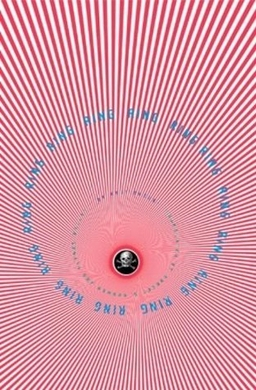
Translated by Robert B. Rohmer and Glynne Walley
I just re-read Ring because I remember it being an easy read and I needed something to occupy my time while sitting outside with my cat, Gravy. It's an easy read because the premise keeps you hooked and interested (even when you know the outcome (which isn't a woman crawling through a television set at all. I'm not even technically sure there's a ghost in this book when you get right down to it)) but also because the Reading Level, on an American Reading Comprehension Test, would be somewhere around 7th Grade. The prose is not complicated at all. It even skirts the edges of being terrible. Granted, I read the translation so I don't know how much of the style translates or if the oddity of the prose is a result of the Japanese language being so different from the English language. That being said, the prose doesn't fucking matter because the book's premise was interesting enough to certainly make Koji Suzuki a rich man by spawning like fifty thousand movies, some of them good, some of them just incomprehensibly misbegotten (like Sadako's baby! (Spoiler? For this book or Spiral? It's hard to say!)). Like Rings. What the fuck, guys? Anybody with a fucking brain stem knows that Rings should have been about the viral video clip going, you know, viral. But instead it's about a research project where the whole thing is mostly contained except for one stupid jerk who goes on a ski trip or something? Look, I've forgotten most of it. I think the only thing they bring to the Mythos from this book which I don't think was touched upon in the other movies was how Sadako was intersex (did Rings touch on that? I seem to remember it did. Unless it was just me thinking the entire time, "Mention how Sadako was intersex! Come on, you cowards!")
I have not read Birthday, S, or Tide so I can't really say I know anything at all about Sadako and the lore of the entire Ring series. That statement is based on just how fucked up the entire premise gets by the second book and how absolutely gravitationally off-kilter it gets by the third. By the six book, we probably find out that Sadako was a simple "Hello World" BASIC program written by a sentient jellyfish from a dimension thirteen levels above ours (actually, upon re-reading this, I should have gone weirder on the speculation since that premise is basically exactly what Loop is (minus the jellyfish)). As pornography. So all of my commentary and speculation in this review will be within the confines of the covers of this book. Will get to the batshit fucking nonsense of Spiral when I decide to re-read that mindfuck.
One aspect of the novel that the movies (as far as I remember (I've never seen the original made-for-television version from 1995 so I can't speak to that)) don't mention is the role of the smallpox virus in the curse. The two aspects which allow for the development and propagation of the curse are Sadako's psychic abilities and being infected with smallpox when she's raped by the doctor who then throws her into the well. What mostly struck me this time as I was reading it was this thought translated from Alan Moore's "Anatomy Lesson" from his early Swamp Thing: "Sadako Yamamura was a smallpox virus that thought it was a girl." The novel explicitly mentions near the end that part of what was driving the curse was the smallpox virus itself seeming to use Sadako's rage and psychic ability to bring itself back from extinction. It found a new way to infect hosts and to keep on living. Sure, Sadako's rage at humanity (mostly at men. There's a heavy theme of rape and how casual it's taken in late 20th Century Japan (and other places, sure, but we're within the confines of the book's covers here, remember! And that's Japan! I wish I understood Japanese culture better than I thought I did until I learned that the creator of Grave of the Fireflies was all, "It isn't a sad movie!" So then I had to read about the movie because fuck you it's the saddest movie and I learned a bunch of stuff that made me think, "Will I ever be able to understand a Japanese movie if that movie was about THAT?!" (This isn't a review of Grave of the Fireflies so if you want to know how it isn't about two super sad kids who tragically die (not a spoiler! You see it at the beginning! Part of the creator's point!) while carrying bones around in a candy tin, go read up on it yourself!))) coupled with her psychic ability is absolutely enough to explain the curse as we've seen by the movies simply concentrating on that. But one thing Suzuki goes to great pains to do is try to explain as much of the oddness and paranormal aspects of the mystery through scientific thought. We'll see more of that in Spiral and Loop even if they get off-the-charts weird.
I mentioned that I'm not sure there's a ghost in this book and that stems from the whole smallpox subplot. In the movies, Sadako physically (or non-corporeally but visually? What am I? A ghosthunter?!) emerges from a television set to scare the life out of her victims. But in the book, the victims all die from sudden cardiac arrest after sensing a terrifying and horrific presence approaching them from behind. But we never know explicitly what they see. The closest we come is when Ryuji is dying and looks in a mirror while sensing something behind him. But he just sees his own face "a hundred years in the future." His final thought is that he "hadn't known it would be so terrifying to meet himself transformed into someone else." We'll learn a little more about the science of the deaths of the bearers of the curse in Spiral (I think. It's just so nuts, man. So, so nuts). But here, it mostly remains a vague half-literal virus compounded with a young girl's trauma and paranormal abilities.
In the end, Ring is more of a mystery novel than a horror novel. It's presented as both but, in the end, they don't shake out into equal amounts. It's mostly a story about how the triumph of the smallpox virus to overcome near extinction and rise up to destroy the world. Like Infinite Jest, the world may not be destroyed by the end of the novel (or by the end of the first chapter in regards to Infinite Jest) but it's heavily implied that the end of everything is under way. That makes it seem like Spiral would be about the end of the world but it's, um, not. At least not according to Ring rules! Spiral seems to be Sadako losing patience with how fucking long it takes for everybody to watch a video tape and then make a copy of that tape and then to get somebody to watch that tape so she's all, "Fuck it! Let's ramp this shit up! Faster, people, faster!" I say "Sadako" in this context and not "the smallpox virus" because Spiral really does make it all about Sadako! So much Sadako! Loads and loads and loads of Sadako! "Loads" might be a pun here. You'll have to wait for my Spiral review to understand it. Or you can go read the fucking book yourself!
I have not read Birthday, S, or Tide so I can't really say I know anything at all about Sadako and the lore of the entire Ring series. That statement is based on just how fucked up the entire premise gets by the second book and how absolutely gravitationally off-kilter it gets by the third. By the six book, we probably find out that Sadako was a simple "Hello World" BASIC program written by a sentient jellyfish from a dimension thirteen levels above ours (actually, upon re-reading this, I should have gone weirder on the speculation since that premise is basically exactly what Loop is (minus the jellyfish)). As pornography. So all of my commentary and speculation in this review will be within the confines of the covers of this book. Will get to the batshit fucking nonsense of Spiral when I decide to re-read that mindfuck.
One aspect of the novel that the movies (as far as I remember (I've never seen the original made-for-television version from 1995 so I can't speak to that)) don't mention is the role of the smallpox virus in the curse. The two aspects which allow for the development and propagation of the curse are Sadako's psychic abilities and being infected with smallpox when she's raped by the doctor who then throws her into the well. What mostly struck me this time as I was reading it was this thought translated from Alan Moore's "Anatomy Lesson" from his early Swamp Thing: "Sadako Yamamura was a smallpox virus that thought it was a girl." The novel explicitly mentions near the end that part of what was driving the curse was the smallpox virus itself seeming to use Sadako's rage and psychic ability to bring itself back from extinction. It found a new way to infect hosts and to keep on living. Sure, Sadako's rage at humanity (mostly at men. There's a heavy theme of rape and how casual it's taken in late 20th Century Japan (and other places, sure, but we're within the confines of the book's covers here, remember! And that's Japan! I wish I understood Japanese culture better than I thought I did until I learned that the creator of Grave of the Fireflies was all, "It isn't a sad movie!" So then I had to read about the movie because fuck you it's the saddest movie and I learned a bunch of stuff that made me think, "Will I ever be able to understand a Japanese movie if that movie was about THAT?!" (This isn't a review of Grave of the Fireflies so if you want to know how it isn't about two super sad kids who tragically die (not a spoiler! You see it at the beginning! Part of the creator's point!) while carrying bones around in a candy tin, go read up on it yourself!))) coupled with her psychic ability is absolutely enough to explain the curse as we've seen by the movies simply concentrating on that. But one thing Suzuki goes to great pains to do is try to explain as much of the oddness and paranormal aspects of the mystery through scientific thought. We'll see more of that in Spiral and Loop even if they get off-the-charts weird.
I mentioned that I'm not sure there's a ghost in this book and that stems from the whole smallpox subplot. In the movies, Sadako physically (or non-corporeally but visually? What am I? A ghosthunter?!) emerges from a television set to scare the life out of her victims. But in the book, the victims all die from sudden cardiac arrest after sensing a terrifying and horrific presence approaching them from behind. But we never know explicitly what they see. The closest we come is when Ryuji is dying and looks in a mirror while sensing something behind him. But he just sees his own face "a hundred years in the future." His final thought is that he "hadn't known it would be so terrifying to meet himself transformed into someone else." We'll learn a little more about the science of the deaths of the bearers of the curse in Spiral (I think. It's just so nuts, man. So, so nuts). But here, it mostly remains a vague half-literal virus compounded with a young girl's trauma and paranormal abilities.
In the end, Ring is more of a mystery novel than a horror novel. It's presented as both but, in the end, they don't shake out into equal amounts. It's mostly a story about how the triumph of the smallpox virus to overcome near extinction and rise up to destroy the world. Like Infinite Jest, the world may not be destroyed by the end of the novel (or by the end of the first chapter in regards to Infinite Jest) but it's heavily implied that the end of everything is under way. That makes it seem like Spiral would be about the end of the world but it's, um, not. At least not according to Ring rules! Spiral seems to be Sadako losing patience with how fucking long it takes for everybody to watch a video tape and then make a copy of that tape and then to get somebody to watch that tape so she's all, "Fuck it! Let's ramp this shit up! Faster, people, faster!" I say "Sadako" in this context and not "the smallpox virus" because Spiral really does make it all about Sadako! So much Sadako! Loads and loads and loads of Sadako! "Loads" might be a pun here. You'll have to wait for my Spiral review to understand it. Or you can go read the fucking book yourself!

No comments:
Post a Comment