
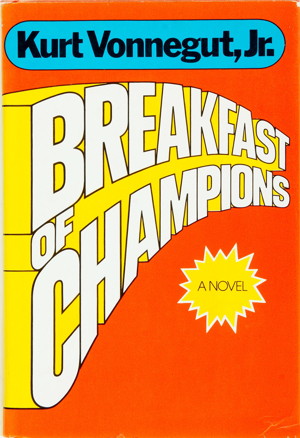
Cover design by Bob Giusti
[This is not a review of the novel. This is simply commentary as I read it. Those looking for pat answers and explications of complicated themes from an academic perspective should move along to some dry and boring Kurt Vonnegut Wiki.]
All speech is political. It can't help but be. But there are those who believe in words like faith and loyalty and patriotism who would have you believe otherwise so that only the things they believe should be spoken about are deemed civil and polite topics for conversation. Talking about heterosexual relationships isn't political; talking about gay relationships is. Discussing raising a baby isn't political; speaking about an abortion is. Bragging about your new rifle you were using at the gun range earlier that day isn't political; bringing up mass shootings is. Calling certain topics political, when all topics are actually political, is just a means of controlling what topics can be discussed openly in a mainstream, status quo environment. It's why one of the most common reactions to a book being banned is "Why the fuck was that banned?!" Most people just aren't searching for things to label as political; they're just living and reading and enjoying life. People who rely on an audience to make a living often discuss how they keep politics out of what they do because they don't want to lose half of their audience. But that's also political and will lose you half of your audience. Especially these days. Just ask Ed Sheeran.
Kurt Vonnegut begins his book entitled Breakfast of Champions with a blurb that, if this were any other author, would feel like a lawyer made them put it in.
What Kurt's doing here is making sure that the reader connects the advertising phrase to this book while explicitly saying that the book isn't connected to it. He wants the reader to understand capitalism is at the heart of what is happening to the people in this book. Capitalism and American exceptionalism. Because if an advertising phrase from corporate America had to be chosen as a National Advertising Campaign for the good old U.S. of A., "Breakfast of Champions" would be a frontrunner.
And, I mean, that phrase, "fine products". He's just kicking them in the balls at that point.
Next comes Kurt's explanation as to why he dedicated the book to a 40 year old widow he knew when he was 16, Phoebe Hurty, which — and even though I just re-read this bit a few days ago, I'd forgotten about when I began this commentary about what topics are deemed appropriate in polite conversations — reemphasizes the point in my initial thesis. Or my first paragraph blather. The bullshit my fingers typed out while showing grave disdain to my brain?
Phoebe Hurty wrote ad copy for the Indianapolis Times. Are you sensing a bit of a theme yet? I wonder how long it would have taken Kurt Vonnegut to write an entire novel that would cause a person to see Mad Men for what it truly is: a bunch of chimpanzees trying to look smart in tailored suits while getting smashed out of their gourds and fucking whatever moves. I mean, Mad Men was that to me when I watched it. But it was still great television! But it felt a bit like watching The Sopranos. I knew audiences were out there falling in love with the main character without understanding how fucking terrible the main character was. While watching Mad Men, I pretty much only liked Stan and Sally's weird neighbor friend.
Oh, sorry! Fucking digressions. Kurt gives an example of Phoebe's ad copy for a sale on straw hats: "For prices like this, you can run them through your horse and put them on your roses." Honesty in advertisement, I suppose. Also, both of these discussions Kurt begins with help to emphasize the name he uses to sign this preface. But first, more about Phoebe! Especially this bit which brings tears to my eyes whenever I read it because I love her so much for it. If one had to worship, they could do a lot worse than Phoebe Hurty.
Some might read the idea of "holding nothing sacred" as having cynical feelings toward everything and believing in nothing. But that's not what I mean (I can't speak for what Phoebe Hurty meant, knowing her for only a scant few pages from a book written in 1973 about a woman from Kurt's memory of 1938). I mean you must even be able to see the humor in the things you hold most dear. And when I say "humor", I don't mean the schoolyard bully shenanigans that the most ignorant members of society believe constitute the bulk of humor. Humor isn't laughing because you made somebody's day worse. I mean seeing the ludicrous in the divine while still somehow embracing that which brings you awe. I mean that in as secular a way as possible, just in case you thought I suddenly found Jesus like my dumb childhood friend, Bob Henline. I guess his comedy career was getting too expensive and his most viral Instagram post caught on with religious nuts so now he's all-in on praising Jesus. This is just his fifty-five year old version of eating a moth at that Halloween party to impress us all when we were in our 20s.
Fuck me do I ramble. Christ!
Vonnegut's description of Phoebe as graceful in her impoliteness forces me into another digression about being an edgelord. I have, in my time, been accused of being an edgelord. But I think Vonnegut puts his finger on something that I've noted about being an edgelord, or as Kurt comments on it in 1973, being impolite. The difference I found in my "edgelord"ness versus an actual edgelord is that I find my way to "edgelord" topics naturally and by following a path through humor. If I become impolite in my commentary, it's at the service of thoughts that made me laugh, or got me thinking, or felt needed to be said for context of other ridiculous things I said. Actual edgelords, or those who have no grace in being impolite, begin with the thought: "How do I get people to react? How do I offend? What will get me a response?" Some people don't notice the difference between graceful impoliteness and edgelordism because they believe that their reaction is the deciding factor. If something offended them or made them angry, that thing was said purposefully to garner that reaction. Some people are not as perceptive as Kurt Vonnegut and, well, you know, um, me!
Vonnegut moves on to explain why, in this novel, he expresses a belief that human beings are machines. He provides ample evidence to back up his opinion that we are subject more to the whims of nature and chemicals and a body that we have less control of than we think we do than we are subject to the commands our brains issue. His conclusion — a conclusion of a man who saw his mother commit suicide, who suffered from depression himself, and who saw his son deal with schizophrenia — is thus:
All speech is political. It can't help but be. But there are those who believe in words like faith and loyalty and patriotism who would have you believe otherwise so that only the things they believe should be spoken about are deemed civil and polite topics for conversation. Talking about heterosexual relationships isn't political; talking about gay relationships is. Discussing raising a baby isn't political; speaking about an abortion is. Bragging about your new rifle you were using at the gun range earlier that day isn't political; bringing up mass shootings is. Calling certain topics political, when all topics are actually political, is just a means of controlling what topics can be discussed openly in a mainstream, status quo environment. It's why one of the most common reactions to a book being banned is "Why the fuck was that banned?!" Most people just aren't searching for things to label as political; they're just living and reading and enjoying life. People who rely on an audience to make a living often discuss how they keep politics out of what they do because they don't want to lose half of their audience. But that's also political and will lose you half of your audience. Especially these days. Just ask Ed Sheeran.
Kurt Vonnegut begins his book entitled Breakfast of Champions with a blurb that, if this were any other author, would feel like a lawyer made them put it in.
The expression "Breakfast of Champions" is a registered trademark of General Mills, Inc, for use on a breakfast cereal product. The use of the identical expression as the title for this book is not intended to indicate an association with or sponsorship by General Mills, nor is it intended to disparage their fine products.Vonnegut knows he's in the right to use this phrase as the title of his book (aside from how much better the slogan works for a martini than a bowl of shitty flakes) and he also knows that corporations are fucking lunatic bastards who try to squash anybody that might seem to be infringing on their trademark. So he kicks the legs out from under their lawyers and says, "This book is going to deal with things that a massive corporation that doesn't want to be associated with those things might get antsy about. They don't want you to think about race and poverty in America when you sit down to eat their stupid, boring fine product which you have to add a ton of sugar to. They don't want to be seen as political so I'll state right up front that this book doesn't have anything to do with them." Except Kurt knows that's not what he's saying at all. This has everything to do with them and all the other advertisers who don't want anybody to attach any politics to their product lest a boycott ensue.
What Kurt's doing here is making sure that the reader connects the advertising phrase to this book while explicitly saying that the book isn't connected to it. He wants the reader to understand capitalism is at the heart of what is happening to the people in this book. Capitalism and American exceptionalism. Because if an advertising phrase from corporate America had to be chosen as a National Advertising Campaign for the good old U.S. of A., "Breakfast of Champions" would be a frontrunner.
And, I mean, that phrase, "fine products". He's just kicking them in the balls at that point.
Next comes Kurt's explanation as to why he dedicated the book to a 40 year old widow he knew when he was 16, Phoebe Hurty, which — and even though I just re-read this bit a few days ago, I'd forgotten about when I began this commentary about what topics are deemed appropriate in polite conversations — reemphasizes the point in my initial thesis. Or my first paragraph blather. The bullshit my fingers typed out while showing grave disdain to my brain?
Phoebe Hurty wrote ad copy for the Indianapolis Times. Are you sensing a bit of a theme yet? I wonder how long it would have taken Kurt Vonnegut to write an entire novel that would cause a person to see Mad Men for what it truly is: a bunch of chimpanzees trying to look smart in tailored suits while getting smashed out of their gourds and fucking whatever moves. I mean, Mad Men was that to me when I watched it. But it was still great television! But it felt a bit like watching The Sopranos. I knew audiences were out there falling in love with the main character without understanding how fucking terrible the main character was. While watching Mad Men, I pretty much only liked Stan and Sally's weird neighbor friend.
Oh, sorry! Fucking digressions. Kurt gives an example of Phoebe's ad copy for a sale on straw hats: "For prices like this, you can run them through your horse and put them on your roses." Honesty in advertisement, I suppose. Also, both of these discussions Kurt begins with help to emphasize the name he uses to sign this preface. But first, more about Phoebe! Especially this bit which brings tears to my eyes whenever I read it because I love her so much for it. If one had to worship, they could do a lot worse than Phoebe Hurty.
She was funny. She was liberating. She taught us to be impolite in conversation not only about sexual matters, but about American history and famous heroes, about the distribution of wealth, about school, about everything.It's odd that I choose to mention worshiping this excellent woman when what she teaches Vonnegut and his friends is simply this: hold nothing sacred. (Although, yes, Vonnegut mentions at the end of the Preface what he holds sacred. But he also reminds the people reading that he's terrible at being impolite the way Phoebe Hurty was.)
Some might read the idea of "holding nothing sacred" as having cynical feelings toward everything and believing in nothing. But that's not what I mean (I can't speak for what Phoebe Hurty meant, knowing her for only a scant few pages from a book written in 1973 about a woman from Kurt's memory of 1938). I mean you must even be able to see the humor in the things you hold most dear. And when I say "humor", I don't mean the schoolyard bully shenanigans that the most ignorant members of society believe constitute the bulk of humor. Humor isn't laughing because you made somebody's day worse. I mean seeing the ludicrous in the divine while still somehow embracing that which brings you awe. I mean that in as secular a way as possible, just in case you thought I suddenly found Jesus like my dumb childhood friend, Bob Henline. I guess his comedy career was getting too expensive and his most viral Instagram post caught on with religious nuts so now he's all-in on praising Jesus. This is just his fifty-five year old version of eating a moth at that Halloween party to impress us all when we were in our 20s.
Fuck me do I ramble. Christ!
Vonnegut's description of Phoebe as graceful in her impoliteness forces me into another digression about being an edgelord. I have, in my time, been accused of being an edgelord. But I think Vonnegut puts his finger on something that I've noted about being an edgelord, or as Kurt comments on it in 1973, being impolite. The difference I found in my "edgelord"ness versus an actual edgelord is that I find my way to "edgelord" topics naturally and by following a path through humor. If I become impolite in my commentary, it's at the service of thoughts that made me laugh, or got me thinking, or felt needed to be said for context of other ridiculous things I said. Actual edgelords, or those who have no grace in being impolite, begin with the thought: "How do I get people to react? How do I offend? What will get me a response?" Some people don't notice the difference between graceful impoliteness and edgelordism because they believe that their reaction is the deciding factor. If something offended them or made them angry, that thing was said purposefully to garner that reaction. Some people are not as perceptive as Kurt Vonnegut and, well, you know, um, me!
Vonnegut moves on to explain why, in this novel, he expresses a belief that human beings are machines. He provides ample evidence to back up his opinion that we are subject more to the whims of nature and chemicals and a body that we have less control of than we think we do than we are subject to the commands our brains issue. His conclusion — a conclusion of a man who saw his mother commit suicide, who suffered from depression himself, and who saw his son deal with schizophrenia — is thus:
So it is a big temptation to me, when I create a character for a novel, to say he is what he is because of faulty wiring, or because of microscopic amounts of chemicals which he ate or failed to eat on that particular day.
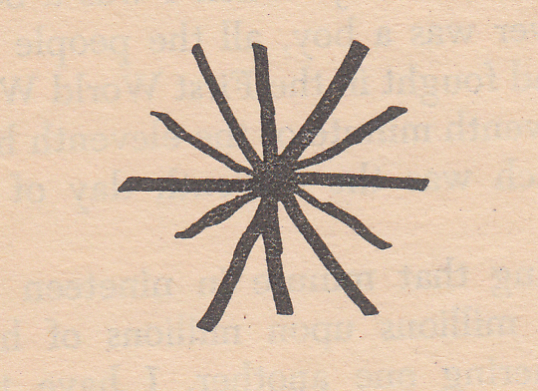
Here is Vonnegut's illustration of an asshole from the Preface. I don't remember when I first read this book but, like never forgetting "Out vile jelly!" after my first reading of King Lear, it has never not been at the forefront of my brain.
Kurt goes on to explain why he wrote this novel, a novel that he feels terrible about. He decided his brain needed a spring cleaning and he resolved to get out all of the useless junk that other people had shoved into it, leaving them in this novel. So here's more stuff that makes me cry.
So that's basically the premise. He goes on to shit on Veterans' Day because it's a lousy, self-serving version of the world's Armistice Day created after The Great War ended. And then he signs the Preface, "Philboyd Studge". That name, he explains, he got from a friend who said reading a particular book felt like it was written by somebody with that name. Maybe the friend was just pulling that name out of a forgotten corner of his head, part of his cultural detritus picked up and stored within his brain, and he only meant the book was tedious. But the name comes from a short story from The Chronicles of Clovis by Saki. "Filboid Studge" is the name of a shit cereal that becomes a wild success because of the advertising slogan.
Cereal. Advertising. A shit product.
Apparently Kurt Vonnegut recommends two kicks to the balls. Just to be fucking sure your opponent stays down.
The things other people have put into my head, at any rate, do not fit together nicely, are often useless and ugly, are out of proportion with one another, are out of proportion with life as it really is outside my head.Okay, sure, that's scarily close to the beginning of some spree killer's white supremacist manifesto! But take it in context and from the fifty year old man who is lamenting what he's grown up believing was "American culture" to only realize that none of it makes sense, none of it scales correctly, and most of it is ugly and useless. Most of what he's discarding is a product of capitalism, advertising, and systemic racism. He's writing this in 1972. I bet this Kurt Vonnegut would later love the short-lived disco culture.
I have no culture, no humane harmony in my brains. I can't live without a culture anymore.
So that's basically the premise. He goes on to shit on Veterans' Day because it's a lousy, self-serving version of the world's Armistice Day created after The Great War ended. And then he signs the Preface, "Philboyd Studge". That name, he explains, he got from a friend who said reading a particular book felt like it was written by somebody with that name. Maybe the friend was just pulling that name out of a forgotten corner of his head, part of his cultural detritus picked up and stored within his brain, and he only meant the book was tedious. But the name comes from a short story from The Chronicles of Clovis by Saki. "Filboid Studge" is the name of a shit cereal that becomes a wild success because of the advertising slogan.
Cereal. Advertising. A shit product.
Apparently Kurt Vonnegut recommends two kicks to the balls. Just to be fucking sure your opponent stays down.

No comments:
Post a Comment